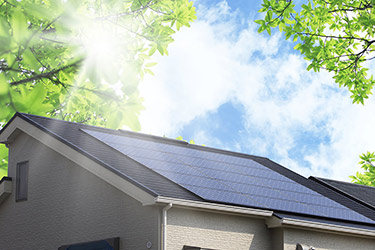
Based on historical 77861 data, solar panels that are tilted towards the equator at an angle equal to the latitude will produce the maximum solar energy output in 77861.[1]
The region associated with 77861 has an average monthly Global Horizontal Irradiance (GHI) of 4.65 kilowatt hours per square meter per day (kWh/m2/day), which is approximately 3% greater than the average monthly Direct Normal Irradiance (DNI) of 4.5 kWh/m2/day. [1]
Solar installations in 77861 that are always titled at the latitude of Iola (Average Tilt at Latitude or ATaL) average 5.11 kWh/m2/day, or about 10% greater than the average monthly GHI of 4.65 kWh/m2/day and approximately 14% greater than the average monthly DNI of 4.5 kWh/m2/day. [1]
Solar Energy Glossary
Global Horizontal Irradiance (GHI)
Global Horizontal Irradiance: The total amount of solar radiation that is received per unit area by a surface that is always positioned in a horizontal manner.
Direct Normal Irradiance (DNI)
Direct Normal Irradiance: The total amount of solar radiation received per unit area by a surface that is always perpendicular to the sun rays that come in a straight line from the direction of the sun at its current position in the sky.
Average Tilt at Latitude (ATaL)
Average Tilt at Latitude: The total amount of solar radiation received per unit area by a surface that is tilted toward the equator at an angle equal to the current latitude. ATaL will often produce the optimum energy output.
Solar Radiation Levels in 77861
Solar Radiation Data in 77861
See the chart below for monthly solar radiation levels in 77861.
* Amounts listed in kWh/m2/day (kilowatt hours per square meter per day)
Solar Radiation Analysis for 77861
The region associated with 77861 has a average annual solar radiation value of 5.29 kilowatt hours per square meter per day (kWh/m2/day). [1]
The month with the highest historical solar radition values in 77861 is September with an average of 6.06 kWh/m2/day, followed by August at 6 kWh/m2/day and July at 5.75 kWh/m2/day. [1]
The three months that historically average the lowest average solar radiation levels in 77861 are December with an average of 4.03 kWh/m2/day, followed by January with an average of 4.43 kWh/m2/day and March at 4.84 kWh/m2/day. [1]
Solar Power Comparison: 77861 vs. the U.S.
Solar Power Levels in 77861
The average monthly solar radiation level in 77861, of 5.29 kilowatt hours per square meter per day (kWh/m2/day) is approximately 35% greater than the average level of 3.93 kWh/m2/day in a city with historically low levels (WA) and is approximately 20% less than the average level of 6.61 kWh/m2/day in a city with historically high levels (NV). [1]
→ Values listed as 0 (zero) are not available (N/A).
Solar Power: 77861 vs. the U.S.
Below is a month-by-month comparison of how average 77861 solar radiation levels compare to average levels in a city with historcially high levels (NV) and a city with historically low levels (WA). [1]
→ k/m/d = kWh/m2/day = kilowatt hours per square meter per day.
→ Values listed as 0 (zero) are not available (N/A).
We do not have data on solar panel installations in ZIP Code 77861 at the current time.
Solar Power Output in 77861
The Power of Solar in 77861
Monthly AC solar system output averages for 77861. Month-by-month solar power, as ranked by AC output, in 77861. [2]
* Amounts listed in kWhac (kilowatt hours (AC))
Solar Output Analysis for 77861
77861 has a average annual solar AC output value of 5851.78 kilowatt hours (AC). [2]
The month with the highest historical solar power output in 77861 is August with an average of 543.01 kWhac, followed by September at 533.39 kWhac and October at 529.26 kWhac. [2]
The three months that historically average the lowest average solar output levels in 77861 are December with an average of 395.85 kWhac, followed by February with an average of 429.55 kWhac and January at 430.83 kWhac. [2]
The ZIP code 77861 is associated with the city of Iola in Grimes County in Texas.
77861 Solar Energy & Power
To learn more about solar energy and solar power in 77861, or for more solar-related resources for TX, check out the U.S. Energy Information Administration.
Did you know?
Solar cells convert sunlight into electricity through a physical process known as the photovoltaic effect.